


WoMent: CSIC Valencian Community scientific mentoring programme concludes its first edition
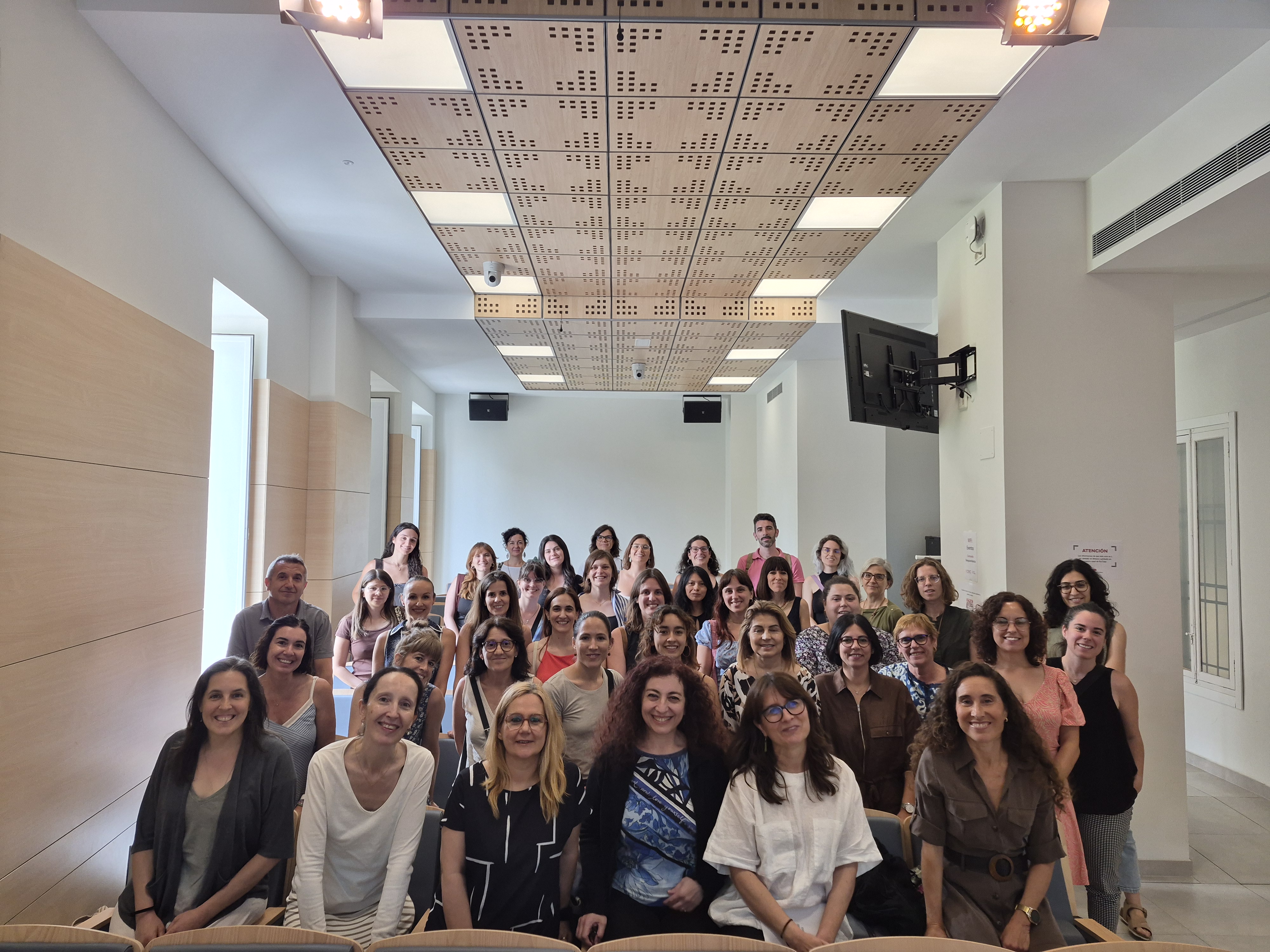
WoMent, the first CSIC mentoring programme for PhD candidates at CSIC research centres in the Valencian Community, concluded its inaugural edition last Friday with a closing event held at the CSIC House of Science in València. The event brought together the programme’s mentors and the early-career researchers (mentees) who took part in the initiative.
The event was chaired by Dr Marta Feliz, programme coordinator and researcher at the Institute of Chemical Technology (ITQ, CSIC–UPV); Dr Cristina Martínez, Deputy Director of the ITQ (CSIC–UPV); and Dr Amparo Querol, Deputy Delegate of the Spanish National Research Council (CSIC) in the Valencian Community.
The event continued with the panel discussion “Experiences and Overall Assessment of the Mentoring Programme”, moderated by M.ª Dolores Gómez (IBMCP, CSIC–UPV). The discussion featured mentees Júlia Pérez Pérez (IBMCP) and Elena Vicente Cayuela (ITQ), together with mentors Carla Rubio-Villena (I2SysBio, CSIC–UV), Elena Villa, and Ethel Queralt (IBV). Mentors and mentees reflected on whether WoMent had met their expectations, whether it had helped guide their professional decision-making, and whether, from the mentors’ perspective, the programme had encouraged them to reflect on the concerns and aspirations of their own students. The session concluded with an evaluation of WoMent’s first edition, aimed at identifying improvements for future editions of the programme.
The programme continued with the talk “Beyond the PhD: Building a Career in Industry”, delivered by Dr Cristina Vilanova, Chief Executive Officer of Darwin Bioprospecting Excellence. In her presentation, Dr Vilanova shared her experience of developing a research and innovation career within the private sector.
The event concluded with a question-and-answer session and an open discussion among the participants.
WoMent: from experience to excellence. Mentoring for women researchers
WoMent aims to support and inspire the academic and technological careers of future women PhD graduates from CSIC research centres in the Valencian Community (CSIC-CVA) through personalised mentoring by experienced professionals from the scientific and technological fields within these institutions. The programme seeks to contribute to reducing the gender gap in research careers. The mentoring was delivered through four one-hour one-to-one sessions, held either in person or online.
This first edition of WoMent was promoted by Dr Marta Feliz, a member of the Equality Committee at the Institute of Chemical Technology (ITQ, CSIC–UPV), and was made possible through the collective efforts of the Equality Committees of the CSIC research centres in the Valencian Community.
WoMent at IFIC
The Institute for Corpuscular Physics (IFIC), a joint research centre of the Spanish National Research Council (CSIC) and the University of Valencia, has been actively involved in the development of the first edition of the WoMent programme since its inception. In particular, Sonja Orrigo, coordinator of the institute's Equality and Diversity Committee (CID) from April 2024 to May 2026, took part in the closing ceremony as one of the programme's organisers from its launch.
Sonja Orrigo highlights that "the excellent reception of the WoMent programme demonstrates its value as a multidisciplinary initiative with a gender perspective. It not only helps to build support networks and provide role models, but also proves enriching for both mentees and mentors, while addressing key needs such as career guidance and strengthening self-confidence during the advanced stages of doctoral studies".
In addition, IFIC researchers Susana Cabrera, Carlos Escobar, Miriam Lucio, Laura Molina, María Moreno, Ana Ros, José Salt and Emma Torró served as mentors, supporting doctoral students from other research institutes over several weeks of joint work between January and June 2026. Meanwhile, six IFIC PhD students participated as mentees. These mentoring sessions provided them with close, specialised guidance aimed at strengthening their skills and exploring new academic and professional opportunities, thereby contributing to a more diverse and equitable scientific system.